


5 things you need to know about space waste
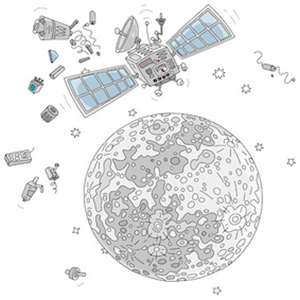
Uzay has an indispensable importance in many areas of our daily life. Many critical tasks from weather forecasts to monitoring environmental changes occur through satellites in space. However, countless objects sent to space for years led to the accumulation of large amount of space waste. These wastes create serious risks for both space research and living on the world. Here are 5 important points to know about space waste:
]
1. Everything goes back to the image]
There are 35,150 objects that are currently rotating in orbit, and only 25 percent of them consist of active satellites. The rests consist of space waste such as satellites or rocket parts that have lost its function. Also, the small millions of debris parts that will not be watched are also filled in orbit. Up to 2030, more than 100,000 new spacecrafts are expected to be launched in orbit, which will make the situation more difficult. [
2. Space pollution can reach a irreversible point[
As more satellite launch, the risk of collision in space increases. If there is a lot of objects in orbit, a collision chaining reaction can start and our orbit can be used. This situation is called "Kessler Syndrome" and means creating more debris by multiplying each other in orbit.
3. Collisions pose risk
Space objects move faster than 25,000 kilometers per hour, which makes collisions very dangerous. Even a small space waste piece can cause big damage. A satellite collide running with a satellite lost its function in 2009 and the waste left from this collision still in orbit.
4. Waste cleaning technology is not yet advanced]
Some technologies are developed to clean waste in space, but they are not yet widely available. Therefore, it is hard to clean the pollution in space for now. It can take years or even centuries if debris are out of orbit.
[
5. International rules required
The international rules of binding to reduce space waste are not yet. While some guides and good applications are improved, they are limited to adapt to them. To ensure the safety of space, you need more comprehensive rules.
Source: UNU-EHS Interconnected Disaster Risks 2023 report
Source: Sustainable Living