


Blog
What happened on the fourth day of COP31?
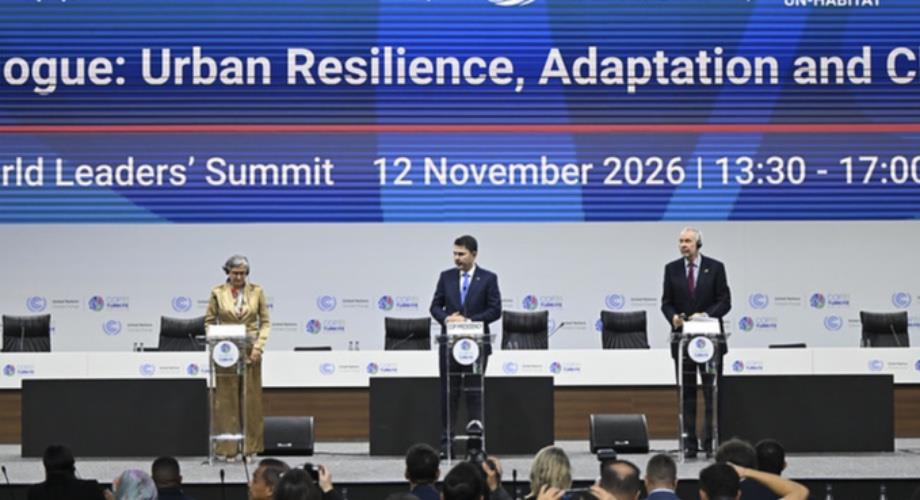
On the fourth day of COP31, which continues in Antalya, the resilience of cities against climate change, reduction of methane emissions and climate finance came to the fore. While the role of cities in climate policies became more prominent, the difference between financing needs and available resources continued to be one of the main problems of the negotiations.
The talks on November 12 also revealed the difficulties countries face in translating their climate goals into practice. Differences continued on issues such as the transition away from fossil fuels, a just transition, and developing countries' access to finance.
Cities are getting more on the climate agenda
The role of cities in combating climate change became an important topic on the fourth day of COP31. High-level meetings were held to increase the resilience of cities against climate risks, develop adaptation policies and accelerate local climate actions.
Anacláudia Rossbach, Executive Director of the United Nations Human Settlements Program (UN-Habitat), emphasized that housing policies and urban planning are integral parts of climate action.
This approach shows that the fight against climate change is not limited to energy production and industrial policies. The quality of housing, transportation systems, green areas and infrastructure investments also affect the emissions of cities and their resilience to climate risks.
The financing needs of cities are growing
According to the assessments shared within the scope of COP31, approximately 3 billion people around the world cannot access adequate housing conditions. More than one billion people live in settlements with inadequate infrastructure that are vulnerable to risks such as floods, landslides and extreme temperatures.
It is stated that cities need approximately 4.5 trillion dollars annually for climate investments. Current financing meets approximately one fifth of this need.
On the other hand, it is stated that the share of measures covering cities in national climate plans has increased from 50 percent to 80 percent. Additionally, 69 mayors representing more than 250 million people announced new climate action commitments.
Differences of opinion continue on climate finance
Climate finance discussions, which came to the fore in the first days of COP31, continued on the fourth day. Developing countries, in particular, demand easier access to the resources they need to adapt to the effects of climate change.
The means by which the financing is provided are as decisive as the amount. Some countries point out that the credit-dominance of climate finance may increase their existing debt burdens.
The evaluations brought to the agenda by Seychelles also focused on this problem. It was emphasized that the resources provided to combat climate risks should not increase the financial fragility of countries.
These discussions show that climate finance is not just about providing more resources. The conditions, accessibility and suitability of the financing to the needs of the countries are decisive.
At the end of the fourth day, while negotiations on climate finance continued, no new and binding agreement was announced.
Monitoring and reduction studies in methane emissions
On the fourth day of COP31, efforts to reduce methane emissions were also brought to the agenda. The United Nations Environment Program (UNEP) stated that interventions have been carried out against five major methane emission sources in Canada, Iraq, Kazakhstan and Mexico since June 2026.
It is stated that the amount of methane associated with these sources is approximately 125 thousand tons. However, since it is not clear which period the data covers, this amount cannot be considered as annual emission reduction. It is stated that within the scope of UNEP's monitoring studies, a total of 46 sources were reached in 13 countries.
UNEP's Oil and Gas Methane Partnership 2.0 (OGMP 2.0) program aims to provide more comprehensive reporting of emissions in the sector. 164 companies are participating in the program; these companies represent approximately 43 percent of global oil and natural gas production.
Participation in the program does not mean that companies completely eliminate methane emissions. Expanding the reporting scope is important for more accurate measurement of emissions and monitoring of reduction efforts.
Moving away from fossil fuels and a just transition are on the agenda
Policies aimed at moving away from fossil fuels continue to be among the important topics of the COP31 negotiations. While some countries advocate accelerating the energy transition, others emphasize different implementation schedules due to economic conditions and energy security.
These differences of opinion make it difficult to take common and binding decisions on reducing fossil fuel use.
A just transition aims to protect workers and communities affected by the transition to a low-carbon economy. At COP31, the scope and financing of international cooperation mechanisms that will support just transition policies are being discussed.
While some agreements have been reached on the format of these mechanisms, opinions regarding financing have not been finalized yet. The situation shows that the creation of new cooperation structures is as important as the resources with which they will be supported.
Participation and justice debates in climate policies
On the fourth day of COP31, the social dimension of climate policies was also on the agenda. Youth representatives, indigenous peoples and organizations working in the field of gender equality called for stronger participation in decision-making processes.
Representatives of indigenous peoples demand that the principle of free, prior and informed consent be respected in projects affecting them. Organizations in the field of gender equality emphasize that just transition policies should take into account the needs of women and vulnerable groups.
These demands reveal that the social impacts of climate policies should be evaluated as well as their environmental consequences.
Road map for oceans to 2028
Small island states, African countries and other developing countries are working to strengthen international cooperation on ocean conservation. The initiative is aimed to contribute to the global situation assessment to be held in 2028.
Sea level rise, warming and acidification of the oceans pose significant risks, especially for coastal regions and small island countries. Linking policies for the protection of oceans with national climate plans is decisive in terms of adaptation to climate change and the protection of ecosystems.
After the fourth day: Implementation and financing are decisive
The developments that emerged on the fourth day of COP31 brought the relationship between climate targets and the resources required to implement these targets back to the agenda. The increased inclusion of cities in climate policies and studies on monitoring methane emissions show that progress can be made in different areas.
On the other hand, the financing needs of cities, concerns about the debt burden of developing countries and the financing of just transition mechanisms are among the issues awaiting solution. Differences in opinion on moving away from fossil fuels will also be decisive in the coming days of the negotiations.
The main issue in the next stages of COP31 will be how the declared goals and developed cooperation mechanisms will be transformed into concrete practices.
Resources
· United Nations Human Settlements Program (UN-Habitat). “Cities and Urban Climate Action.” COP31, Antalya, November 2026.
· United Nations Environment Program (UNEP). “Global Methane Assessment Update 2026.” November 2026.
· United Nations Environment Program (UNEP). "Oil and Gas Methane Partnership 2.0 (OGMP 2.0) Progress Report." November 2026.
· Seychelles Delegation. “COP31 Funding Negotiations Statement.” November 2026.
· United Nations Climate Change Secretariat (UNFCCC). “COP31 Official Negotiation Records.” 9-13 November 2026.
· World Health Organization (WHO). "COP31 Opening Conference Bulletins." November 2026.
Source: https://cop31.tr