


Agrivoltaic agriculture hopes
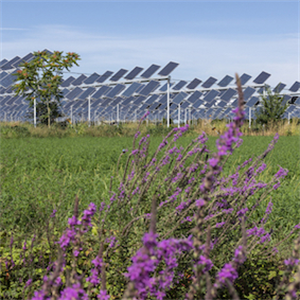
In Tanzania, which meets 40 percent of the body from hydropower sources, drought both agriculture hits electricity production. Emilia Laymond, farmer from Tanzania; “We made planting twice a year. Now rainfalls are so little that we don’t even do a single harvest.” Laymond, living in the village of Vianzi, has seen its own eyes, which affects the farming and livestock of magnitude: “The life span leads to the increase of expensiveness. Especially for those who travel from agriculture like us...” Like 80 percent of Tanzania countryside, another thing that pushes Laymond is access to electricity. On the other hand, Tanzania is a very rich country in sunlight. Solar energy can be a reliable source of electricity, but it is necessary to invest in a large amount. It doesn’t take place to planting in addition to filling agricultural land with solar panels. But there is a method that can offer solutions to farmers like Laymond: Agrivoltaic systems.
“There is no access to electricity because there is a catastrophic for a lot of couples”]
Agrivoltaic systems are produced under clean electricity with raised solar panels in the same part of the soil. Under the solar panels installed on several meters, livestock can also be built, even panels can be used to collect rainwater. This method is particularly useful when used intensive energy to attract water from the rivers or wells in drought months. Hamad Mkopi, living in Tanzania countryside, says “No access to electricity because it is a disaster for many farmers.” If there are a few people who can connect electricity such as Mkopi, they meet high electrical bills. Electric price is demanding farmers. Increases the cost of freight and agricultural products. Mkopi hopes to dry the fruits produced by taking solar panels, so that they can store them for longer time and sell them at better price. [
]10 times require more space]
According to the US-based thought organization Brookings Institution; traditional solar energy production methods require more than 10 times according to natural gas or coal plants that produce the same amount of electricity. This leaves less space to agriculture and the farmers get away from this idea. Working on agrivoltaik project in Tanzania, Dr. Sheffield University Randle-Boggis; “We need to produce energy with low carbon release. On the other hand, we need the ground to produce food. So it’s a problem to give up food production for energy production” says. For this reason, the raised solar panels simultaneously encounter less objections compared to other renewable energy production methods as it allows for both agriculture and electrical production.
A micro-climatic that the ball remains more humid
It can be reached in villages such as Vianzi, as well as healing in the field of health. Tanzania burns wood and coal to eat almost everyone in rural and warm up. Energy produced by Agrivoltaic systems can prevent the left of harmful fumes by allowing for the use of electric stove in kitchens. In addition, the raised solar panels provide a rest in a shade where they need a long time working farmers in the field. Home. The preliminary results of the academic research of Randle-Boggis indicate that the shadow generated by the panels has a lower air temperature, the soil creates a micro-climatic that remains humid. The evaporation of less water from the soil due to the shade leads to less water needs. This can create an important difference especially during periods where precipitation is less and unforeseen. Dr. Randle-Boggis says: “Agrivoltaic methods give three aspects: water, energy and food. This is the method of producing solar energy better. What makes me the most exciting thing about it is that it is to resist the climate change of farmers. "
]
Enhancing water usage efficiency
Water used for agricultural production in Chile creates more than 70 percent of total consumption. Engineer David Jung, who specializes in renewable energy projects, says “The future looks bad”. Jung is working in a German research center called Fraunhofer Chile, the first agrivoltaic agricultural project of Chile. Agrivoltaic systems have given results from now. Jung; “The biggest effect is definitely thanks to the shade. It says that the water increases the yield of use. The last summer was determined that the drip irrigation method applied in Chile was 29% more humid than the territory under the agrivoltaic panels. More than three billion people live in rural regions where water scarcity is high or very high, according to the United Nations Food and Agriculture Organization. So water saving is becoming more important every day next to the world.
[
The most important to decide which types will be added [
In recent academic researches, conflicted results were reached on how agrivoltaic systems affect the amount of harvest. Prof. from Zhejiang University in China Yue-Rong Liang says “The most important thing to decide which types will be planted.” In his studies, agrivoltaic systems have seen the effect on tea plant is extremely positive. Since the tolerance of tea plant to light is low, the shade created by solar panels is prevented from being ‘sunburn’. It is also getting better quality crop and growth speed is also increasing. Some plants such as tomatoes and cotton can not be seen at the same rate of shade. But more research is necessary. Many farmers turn to renewable alternatives. According to civil society organization REN21The energy used for agriculture throughout the world, in 2010, when creating 10 percent of total consumption, this rate was 15 percent.
One of the biggest obstacles access to capital]
Although the number of Agrivoltaic systems has increased significantly in recent years, they have difficulties in spreading these systems into the general; especially in the developing countries. A large part of these systems is located in Europe, North America, Japan and South Korea. That’s why there’s a lack of agrivoltaic expertise in other regions. Solar panel prices fall for a while but the cost is still a big problem. Dr. Randle-Boggis says “One of the biggest obstacles is access to capital.” The cost of agrivoltaic system consisting of 104 panels in Tanzania is around 40 thousand dollars. This money, which should be paid from the beginning, is accessible for many farmers of agrivoltaic systems. Some countries that have banned solar panel installation in these areas to protect agricultural production in the past have not updated their legislation in accordance with the developments in the agrivoltaic area. So legal changes may also be required for the spread of this technology. Jung says “There is a tremendous potential in our front, though there are some obstacles we need to do.”
Source: BBC English
Source: Energy