


The world's largest iceberg is broken
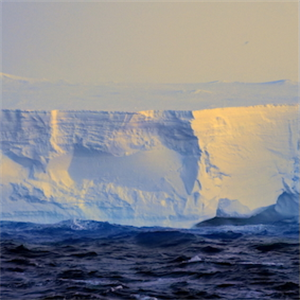
Okyanus began to break the largest iceberg A23a in the world, which is in the western part of the Weddell Sea in 2020. British Institute of Antarctica Studies (BAS) Vice President of the Department of Pole Oceans Dr. Andrew Meijers said that the ice mountain quickly separated into pieces, and these parts are slipped by the U.S. National Ice Center, said that after copan pieces, A23a came to the size of London in about 1700 kilometers.
The unable]
Andrew Meigers said that the world’s largest iceberg is now D15A, with the breakdown of A23a, said: “A23a lost the world’s largest iced title. D15a with about 3 thousand kilometer size, almost two times of A23a. D15a is largely in motionless near the Davis Base belonging to Australia on the Antarctica coast. A23a is the second largest iceberg in the world. On the other hand, I'm waiting for the gradual speed of the fragmentation. Since we started to progress towards the western part of the Weddell Sea, it was increased by speeding the melt. If you are now on the waters on the degree of freezing. In addition, the progress towards the north and the arrival of the spring in the southern half sphere strengthens the possibility of mulching until the ice mountain is not traced quickly into smaller parts. "
Buz pitches lost six trillion ton ice
]Andrew Meijers said that all these processes have been in accordance with the nature of the ice mountains, while one for thousands of years, he told that the profits become a layer of ice by tightening over time and then creating icefields by mixing the ocean. Meijers expressed that these ice masses can be broken from many reasons such as melting and tide, "The small parts from the front parts of the wood are broken, sometimes the main part of A23a could also occur giant ice mountains such as A23a." Meijers noted that the impact of climate change in the formation of mega ice mountains is not yet possible to measure statistically due to frequent occurrence of ice mountains such as "However we know that icefields lost about six trillion tons of ice with increased iceberg ruptures since 1997, and in the same period, a similar amount of loss occurred with increased melting. The big part of these losses is thought to be caused by changes in the ocean circulation and more access to the ice field of hot water.
The copulet of the remaining calules in the year
Andrew Meijers said that the loss of these ice mountains affects the sea level rise due to drifting in the sea, nevertheless, such losses can accelerate the break of the remaining frosts. Meijers noted that the possibility of exceeding 15 meters of the sea level, if the melts in Antarctica were not emitted by scientists, "Changes experienced in the provinces have already guaranteed the sea level of 2 meters in the future. When it will happen, he spoke to the ratio of human resources.
Erimenin is researching the influence of the ocean ecosystem]
Dr. Geraint Tarling de, Leader of BAS Ecosystem, expressed that A23a melt was taken examples in the process of being installed in South Georgia in order to measure the potential effect of the ecosystem. Tarling, which states that these analyzes are currently examined in the UK, has created a huge impact on the living and huge amount of cold fresh water release, possibly living in the sea base and the living creatures surrounding water. It is important to understand these effects because it can become a more frequent phenomenon in South Georgia due to global warming.
[
] In2020 it moved with ocean discharges
A23a broke from Filchner-Ronne Ice Field in Antarctica in August 1986. After this break, the remaining iceberg fixed for about 34 years, began to progress towards the western part of the Weddell Sea, moving through the ocean discharges in 2020. During the trip, the iceberg with a vortex is turned around until the midst of December 2024. A23a, who survived in December, was dragged towards the north of Antarctica. The iceberg was sitting on the South Georgia Island in March 2025, in the land by multiplying the shallow continent area, 80 kilometers from the land.
Source: Climate Change