


Blog
Waste cotton handle turned into high value biomaterial
Researchers from IYTE and Malaysia have developed high-value bacterial nanocellulose, which can be dissolved in nature from waste cotton stems.

11 steps to protect the value in our plate
Three of the food produced throughout the world every year, or disappears without reaching tables or goes to garbage. This situation is not only an economic loss but also one of the reasons that the climate crisis does not appear. Energy spent during food production, transportation and consumption, water and labor; wastes waste together with every product. All of food systems, human-source greenhouse gas emissions...

100 percent green electricity pass target from Boyner Group
Boyner Group, who met half of the electricity used in 2024, plans to remove this rate from 100 percent as of 2025.

‘Small Ice Age’ door for Europe
Global warming brings a vital sea discharge in the North Atlantic Ocean. According to a new research, the gigantic discharge system, located in the south of Grönland, 'North Atlantic Blitz' has lost its stability for the first time since 1950s and hands to a irreversible partner. The climate of Europe and North America by moving the heat from the tropicals to the North Atlantic...

No information about 99 percent of insects
Despite our great impact on the planet, people are not dominant type. There are about 1.4 billion insects that correspond to every person around the world and when all insects are met, the human population has more mass than 70 times. Although insects are the most crowded and most common class of open intermediates of animals, our information about is quite limited. vital importance for food production...

The future of Europe depends on the climate crisis
According to the European Environmental Agency, climate change and loss of nature poses serious threat to the quality of the continent, well-being and competitiveness.

Under sea creatures and food chain risk
According to the study conducted by scientists from Nelson Mandela Universities in California and South Africa in the USA, the cumulative effects arise due to human pressure on marine ecosystems can increase 2.2 to 2.6 times on the global scale when it comes to 2050. While it is rinsed primarily on the influence of coastal habitats, it will be more...
The share of the countries in the carbon emission is reduced, but not enough Tags
Climate Summit was held on September 24 in New York under the General Assembly of the United Nations (BM) 80. The most important agenda of the Summit was held in Brazil in November, the UN Climate Change Frame Agreement 30’s Parties Conference (COP30) prior to the Paris Climate Agreement, the National Contributors (NDC) reports were obliged to present each five years of the party countries. ...
Fosil fuel production threatens Paris Agreement targets
The fossil fuel production plans of governments are conflicting with the Paris Agreement targets; production over 120 percent of the need in 2030 is predicted.
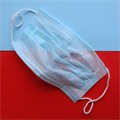
Plastic inheritance behind the pandem
Disposable masks with a safety shield for millions of people throughout the pandemi, leaving a different table behind today. These masks are not only growing the plastic waste problem while being one in the streets, rivers and oceans, but also become an invisible threat by turning into microplastics and hormone-complex chemicals. This simple object used to protect health...

Increased costs harm the energy sector
Climate shocks, increased costs and geopolitical voltages create fluctuations in global industries; energy and food sectors are among the most affected ones.
Lecture notes before COP30
Climate change continues to be one of the most urgent global problems of the twenty-first century. For decades, world leaders are sitting on the table with the search of solutions; many international agreements were signed from Kyoto Protocol (1997) to Paris Agreement (2015). However, while global emissions continue to increase, biological diversity is rapidly reduced. Except exceptional achievements such as the Montreal Protocol,...