


30 billion dollars from garbage
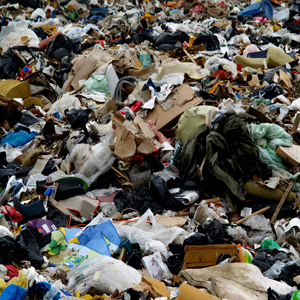
The rapid population increase and urbanization brings different problems with the increase of parallel consumption and the resulting resource shortage. According to World Bank data, the world population produces more than 3.5 million tons of garbage every day. In these garbage there are different ingredients from plastic products to food waste.
[[T]]]
Here we produce electricity or heat energy from these wastes. Metan, methanol, ethanol or synthetic fuels can be obtained in different structures. According to the data of the U.S. Navigant Research company, it is about the annual growth volume of 2 billion dollars of the sector, which obtains energy from garbage in the global diameter. In 2013, the size of the sector that converts garbage into energy is about 8 billion dollars, according to projections, the energy economy from garbage to 2022 will have a maggot of $22 billion. In some reports, optimistic predictive scenarios, the figure in question can go up to 80 billion dollars. [
[[T][6]]
The number of plants that produce energy from trash according to data of Yine Navigant Research has exceeded 800 in approximately 40 countries. While the number of facilities in Europe finds 455, the number of such facilities is 301 in Asia-Pacific, 92 in North America and 30 in the rest of the world.
[
Business has come to such a point that the annual amount of garbage emerged in North European countries is 150 million tons while the waste capacity of such countries is 700 million tons. That’s why countries like Norway, Sweden begin to import garbage even from England, Ireland and even the US.
In the beginning of May the United Arab Emirates is also indicated that this kervana joined. Two companies belonging to the public in the UAE decided to invest in energy from household trash. In the country where the person appeared 2.5 kilograms of garbage per day, 60 megawatt energy capacity plants are planned to start to produce energy from wastes from 2015. Another plant with 100 megawatt capacity will start production in 2017.
]
Navigant Research Anaisti Mackinnon Lawrence reminds that the projects in the countries with strong legislation and regulations in zero waste are common in countries with low carbon policy initiatives and countries with limited space and lands have signed investments in this field.
Finally, it is worth mentioning the environmental size of the topic.
[[
Eyes the plants that they produce energy with different systems. For example, criticisms in the direction that energy-generating plants lead to air pollution. However, with technological investments in recent years, it is noted that negative effects are reduced to the minimum level.
For example, the German Ministry of Environment “With its legal regulations, waste-burning plants do not pose risk in terms of dioxine emissions, dust and heavy metals”. Of course, these descriptions are related to the facilities in Germany. The legal regulations and practices of other countries are changing. That’s why this topic is still subject to discussion.
Of course, the areas where the garbage accumulates only without seeing any transactions are actually a separate environmental problem per itself u. Wastes are dissolving, revealing shackles. This is a negative factor that polluts the atmosphere and affects global warming. [
]
If the energy is produced, the increasing wastes every day will continue to threaten the environment.
Please see ] for detailed information about news.
Please see ] for detailed information about news.