


A new horizon in renewable energy: Osmotic energy
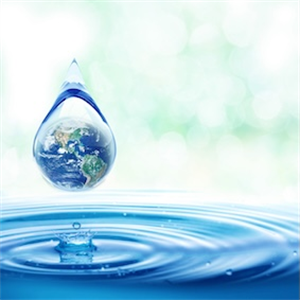
The aim of sustainable solutions has become as important as ever in the fight against change. In addition to common renewable resources such as solar and wind, less known but a type of energy with great potential began to attract attention: Osmotic energy, namaother ‘blue energy’.
What is osmotic energy?]
Osmotic energy is derived from natural salinity between two environments, in points where salty water is combined with fresh water. This process is based on a physical phenomenon called osmosis. Sweet water can produce energy thanks to the pressure difference that occurs when trying to pass salt water, which is more dense than a half-permeable membrane. In the article Fiona Blin Domínguez wrote for Earth.Org, this situation is defined as a "a quiet lightning lighter" (Domínguez, 2025). [
A hope source for humanity
Although this idea came to the agenda in 1970s, it has not been applied for a long time due to technological limitations. In the Netherlands, Redstack and Norway have been a small-scale trials of companies such as Statkraft but it was not maintained due to economic and efficiency issues. Sweetch Energy, an initiative based in France, is candidate to change this situation by developing a revolutionary technology in this field. Ionic Nano Osmotic Difusion (INOD) technology makes ion switch much more efficient thanks to the membranes produced by biomaterials, which have only 10 nanometer size pores. These membranes correspond to the production of 1 W/m2 of previous technologies, 20-25 W/m2 has the potential to produce energy (Domínguez, 2025).
OsmoRhône: Industrial scale first step
]]At the end of 2024, the pilot facility OsmoRhône was founded in the region where the Rhône River combines Mediterranean. This region was selected as the highest osmotic energy potential in France. The ultimate goal of the facility is to reach 500 megawatt capacity, which means a power to provide electricity to about 1.5 million households (Domínguez, 2025).
Why is this initiative important?]
Osmotic energy stands out in terms of being a continuous source of energy, not connected to weather conditions. Also carbon release does not do and environmental impacts are quite low. Sweet water increase, which is formed by the melting of climate change-borne iceuls, can further improve the potential of this type of energy. Thus, osmotic energy can produce energy by using freshwater that arises as a result of both climate change and contribute to fighting this change. Thanks to the work of Sweetch Energy, osmotic energy is a great step towards passing from theory to pratia. To increase diversity in energy production and build a more sustainable future, investing in alternative resources like this, no longer a choice; a must.
[
Source:
]
F. B. (2025, March 27). Osmotic Power: The Next Wave of Renewable Energy. Earth. Org. https://earth.org/osmotic-power-the-next-wave-of-renewable-energy/
Source: Energy