

African world garbage Home
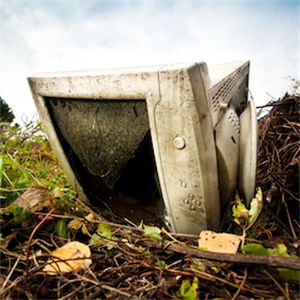
According to the data of merged Nations (BM); 48.5 million tons of electronic waste appeared in 2018 in the world. This is about 125 thousand large aircraft or 4 thousand 500 Eiffel Tower. Only 20 percent of these wastes are officially recycled in the country where they are removed, while the remaining 80 percent part is embedded in the ground or burned in the ground or is imported as the second hand electronic device to less advanced countries in Africa and Asia, contrary to the law. The Basel Convention, which is the party of 188 from 193 countries of the UN member 193, prohibiting the international trade of toxic electronic wastes and prohibiting the transfer, e-wastes are sent to countries that are illegally developing.
At least e-waste from Africa per month]
According to the 2017 report of Global E-Waste Monitor; up to 18.2 million tons in 2016
e-waste appeared in the Asian continent. Asia, 12.3 million tons of waste in Europe, 11.3 million tons of waste America, 2.2 million tons of waste in Africa, 0.7 million tons of waste. In the evaluation of the per person, in 2016, 39 million populations in Oceania ( Yeni, New Zealand, Pacific Islands) 17.3 kilograms (kg), 16.6 kg in Europe with 738 million populations, 11.6 kg in America with 977 million populations, 4364 billion populations in Asia, and 1.9 kilograms of e-waste in African continent with 39 million populations. It is also thought that half of the e-type in Africa is formed by electronic devices that are illegal from America, Europe and China.
]
]
The second hand is exported as electronic device]
The African continent is used as waste garbage in Europe, especially if it contributes at least to the e-waste stack. Due to the fact that there is no need for millions of dollars for a single departure line and the cost of the workforce, e-waste collected in Europe are generally exported as the second hand electronic device. More than 75 percent of the e-wastes are sent from Europe to Nigeria, Ghana and surrounding countries to the huge electronic garbage, leaving the human health and environment harmfully, burned after taking the useful parts of work.
[
The material value of the e-fer in the world is 62.5 billion euros
]
E-wastes with 60 elements harmful to health can provide serious contribution to the economy of the country, when recycled in the correct conditions. The material value of 50 million tons of e-constructs around the world is 62.5 billion euros. This figure doubles the annual production of silver mines in the world and is divided into more than 123 countries' gay pure domestic harvest. Given that a ton of gold mines on a mobile phone have more than 100 times gold, the e-waste recycling to be done in the right conditions is of great importance. However, e-wastes from Europe and America to Africa and Asia have created the non-registration sector here. While the exact number of employed in the non-registered e-waste sector is unknown, at least 100 thousand people in Nigeria according to the International Labor Organization are working at 690 thousand people in China.
Explosive environment and harmful to human health
During the transformation of precious substances such as gold, copper, lead in the E-waste (such as melting in open containers, melting in the acid of the circuit boards) reveals numerous toxic substances harmful to health. E-wastes, including harmful substances to human health such as lead, chrome, mercury, cadmium, pollut water sources, air and food supply chain. Children and women in many countries create 30 percent of employees in unregistered e-waste processing processes. Mother candidates are exposed to poisonous substances here; low, early birth and low-weight baby delivery. While people working in these garbage are encountered in the circulatory system, cadmium and lead, mixed into the blood, is known that the kidneys are lost. [
The conversion plants should be increased]
]
When electronic waste is properly processed, it started to take legal measures on the subject of some African countries, which may arise from harm to the environment and human health.. Only in Uganda and Rwanda, government policies relating to the processing of e-waste, Madagascar, Kenya and Ghana have new laws from parliament. South Africa, Zambia, Cameroon is working on the laws that are concerned. Most African countries have decided to build the facility to restore e-wastes healthyly while they are banned from importing e-waste. Currently there is an e-waste conversion facility in Kenya, South Africa and Cameroon. When the majority of electronic tools from the second hand to Africa and thought that these devices will be much shorter than their lives, these facilities need to increase in all continents. In this way, the contribution of the economy of both countries and the harmful substances in the e-waste are aimed at the prevention of damage to the environment and human health by reevaluating the soil, air and water.
Source: Anadolu Agency
Source: Environmental Protection