


Can blue nutrients be solution to food crisis?
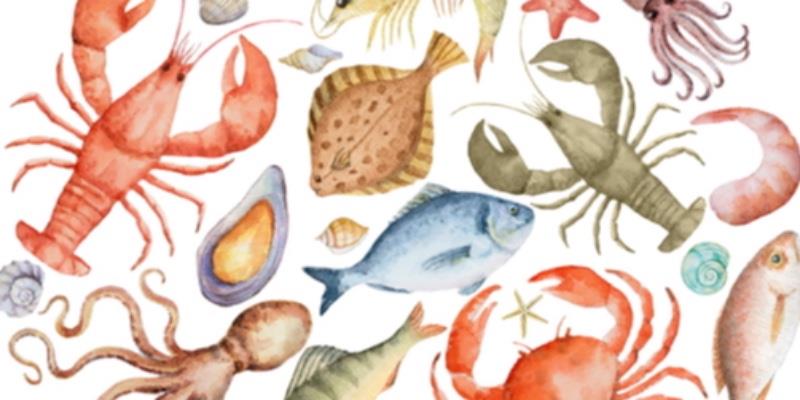
Unified Nations Food and Agriculture Organization (FAO) draws a clear table for 2050: The world population will reach 10 billion and you will need to produce more than 70 percent of the present one. Agricultural lands are limited, the freshwater resources are reduced, the livestock is one of the biggest sources of climate crisis. So how to close this deficit? One of the answers; blue foods. The fish from the ocean, lake and rivers, shell sea products and seaweed are becoming more casual.
The world’s consumption is growing behind Turkey]
According to FAO 2024 data, fish consumption per person worldwide was 9 kilograms in 1961, 20.2 kilograms were released in 2020. This increase left behind the increase of population. The same report says that even up to 2050 to 36 million tons of additional production should be produced. The request can be folded into two. Turkey, outside this table. According to the 2024 data of the Turkish Statistical Authority (TUIC), the per person consumption is 7.7 kilograms. European average 16 to 20 kilograms, world average 20.5 kilograms. Price, consumption habits and distribution issues make this difference. Low consumption also limits the growth of the sector. [
Carbon compare change the table]
]
One of the strongest reasons that stand out of blue nutrients is carbon footprint. According to World Resources Institute (World Resources Institute) data, pony and istiridye produce emissions under a kilogram per kilogram. Small fish such as raw and sardines remain in 1 to 5 kilograms range. Comparison net: chicken creates about 6 kilograms, pig 6.5 kilograms, beef 60 kilograms of carbon release. But there is a critical problem in growing. According to the work published in Nature of Stanford University, 80% of carbon in farm fish comes from fish feed. The small fish are hunting and disrupts the balance to make large fish feed. Midye and oyster leave here. Planktonla feeds, filters water and reduces excess nutrients load. So it’s not only production but also provides ecosystem contribution.
Protein is not a matter of nutrients density]
Blue nutrients are not only protein source, but also strong in terms of nutritional density. According to the research of UC Santa Barbara (Kaliforniya University, Santa Barbara state-supported research university), the trout chicken contains more than 19 omega-3. Midye and oyster 76 times more B12 and 5 times more iron. Sazan contains 9 times more calcium. According to FAO, 3.2 billion people meet at least 20 percent of animal protein from fish. In particular, this rate is increased. Low consumption in Turkey shows that this potential is not used.
Can the seaweed really change the game?]
Blue foods are not just about fish. Seaweed and algae open a new area. Spirulina is 60 to 70 percent protein of dry weight. Red algae contain protein from 10 to 50 percent. The European Union approved 22 alg species as new food in 2022. Around 497 million dollars in 2023 of the global market are expected to exit 954 million dollars in 2032. Seaweed does not require agricultural land, not use sweet water, no need for fertilizer.
However, there is a problem of acceptance. Taste, habit and cost are the biggest obstacles in front of this area. [
Cannot ignore the problem of digestibility]
The potential of blue nutrients is high but the table is not perfect. 34.2 percent of fish stocks according to the World Economic Forum data is overly hunting. 59.6 percent limit. FAO data shows that sustainable stock rate drops to 62.3 percent. It also disappears 30 to 35 percent of the huntfish or wasted. The use of antibiotic in farming highlights water pollution and feed dependence. Certification systems are trying to produce solutions but yet have a limited effect.
Production model changes
According to FAO data, growing in 2022 was the first time hunter. The world now provides a large part of the fish that consumes from farms. It is necessary to increase production from 2050 seriously. This increase is possible only with better feed systems, cleaner production and new resources.
[
What is blue nutrients?]
Blue nutrients will not solve the global food attack alone. But low carbon footprint offers a strong option with high nutritional value and production potential. The main thing is not to increase production, manage it correctly. Limiting over hunting, expanding sustainable cultivation and developing alternative feed sources will be key. Table net in Turkey. We have production, export is strong but low internal consumption. This means a potential that is not used in terms of both nutrition and economy. In the coming years, blue nutrients will find more places in the food system. However, this depends on what policies will be preferred and how to manage resources.
Source: Sustainable Living