


Can save $ 1.3 trillion by reducing plastic pollution 80 percent
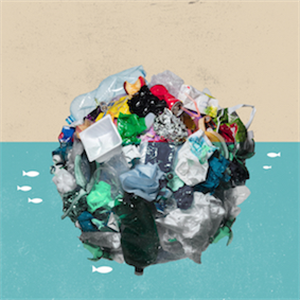
The report, published before the second round of negotiations in Paris at the end of May to form a global agreement to prevent plastic pollution (UNEP), suggests three basic market changes to eliminate problem and unnecessary plastic usage. Reuse is predicted by the implementation of these three changes, which are sorted as the reorientation and diversifying of products with recycling, plastic pollution can be reduced by 80 percent up to 2040. According to the report; even if three changes are applied in the global diameter, it is necessary to fight 100 million ton of plastic pollution, resulting from disposable and short-life products every year until 2040. Despite this, it calculates that transition to a circular economy with measures that the countries will take within three changes will save about 1.3 trillion dollars. It is predicted that this conversion will create a net 700 thousand employment growth up to 2040 and will benefit especially low-income countries.
3.25 trilyon is able to save $]
With the prevention of problems caused by reasons such as health, climate, air pollution and degradation of marine ecosystem, 3,25 trillion dollars are estimated. While UNEP needs to invest $65 billion per year for the systematic change proposed by, the costs to be stacked in the event that the change is not made, at the level of $ 113 billion per year. In order to fight plastic pollution, the adoption of international-sized policies is necessary for national planning, as well as the action of the business world. [
The road map for the traditional economy is drawn][
In the evaluation of the UNEP Executive Director Inger Andersen report, it noted that the methods used in the production, use and elimination of plastics pose risks for human health are also difficult for climate conditions. Anderson offers a role map to create a cyclic economy approach by throwing plastics from both our body and our economy and greatly reducing these risks. In case of following these recommendations, plastic pollution may be a global agreement, large economic, social and environmental gains can be achieved."
Only 10 percent of plastic products in the world is recycled]
The World Nature Protection Foundation WWF calls to countries to ban disposable plastic products that are named as ‘high risk and unnecessary’ in the world. According to WWF, the half of the plastic produced for disposable and short-life products, which lasted hundreds of years, is produced for high and medium-incoming countries. Only 10 percent of plastic products in the world are recycled.
Source: Sustainable Development