


Home
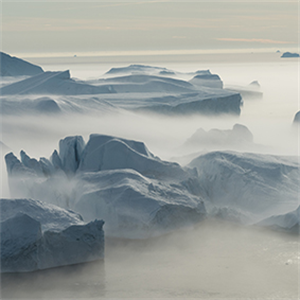
Grönland, the largest island in the world in terms of the faciality, 81 percent of which is covered with ice, comes at the wind of the regions where human-source climate change is hard. According to the news of CNN; a research published in the journal ‘Communications Earth and Environment’ revealed that Grönland lost a layer of 532 billion tons of ice last year, while the 223 billion tonnes revealed that only in July 2019.
The traditional air temperatures were effective[
[[
Science expressed that a record loss was recorded in 2019 for Grönland, which expressed that the decline in snowfall with rising air temperatures, a result of warm atmosphere and cloudless sky conditions. It is thought that poor carbon dioxide levels are the only promising way to avoid excessive ice melt in the future and slow global warmin g. Experts pointed out that the ice loss in Grönland was around 255 billion tons per year in 2003-2016, 2017 and 2018 were years of experience at the time of 2003-2019.
]]
]]300 million people can lose their home
]]
After Antarctica, ‘The second largest ice layer of the world is the region of Grönland, which is in the summer, the iceullar contribute to the increase of millimeters in seawater levels every year. The rise of about 1 meter at the end of the century of seawater levels is predicted. Some projections reveal that over the next 30 years may face the risk of losing 300 million people’s homes. [
Telafi unfamiliable point
]]
]]The report is a member of Ohio University in the United States, revealing that the ice cover in Grönland is now irreversible. Experts note that even if global warming will end today, snowfalls can no longer exceed for lost frosts. Experts say that the climate change has increased momentum with 2000 years, now the iceul melt has dissolved a irreplaceable point in the year of 500 billion tones.
]]
Source: News