


How do we protect biodiversity with circular economy?
We witness the disappearance of biodiversity, which is an unprecedented speed throughout the world history. We have lost 69 percent of the known species from 1970 to 2022. What happens if there are no species, we do not know with the full man because it is a complex topic to predict what types are critical functions as in terms of ecosystem integrity. If we know precisely, the ecosystems lose the efficiency of weakened areas; water resources and carbon capture functions are reduced; they have become more open to fire, flood and extraordinary air events with a reduction of endurance.
‘Why do I have a variety of differentity quickly?’ When said, we can sort out of reasons:[
[Our formats
We create a footprint on the environment as 8 billion people in the world. How we feed is a threat in terms of biodiversity. Approximately 340 million tons of meat in the world is consumed 800 million tons of milk. In the last 50 years with the increase of population and the change of feeding habits, the consumption of meat was tripled. Although there are efforts to be vegetarian in all developed societies or reduce meat (for example, one of the three of the British said that it did in 10 years) in total only 22 percent of the population vegetarian. To support this consumption, it is continued to create expansions that will disrupt the stability of nature for food production and livestock.
]
Changed 75 percent of the blacks]
According to the scientific journal of nature, about 75 percent of the lands, 66 percent of the oceans are modified for the production of food. Land changes for agriculture and human settlement cause disruption of areas with the house of forest or other biodiversity. Increasing efficiency on agricultural lands in the beyond, druging, excessive fertilization; the disruption of the soil quality and water resources connected to it is still important threat to live types. The contamination of excessive fishing, sea and water systems for other basic reasons in the reduction of water creatures... So there are traces of plastic pollution even in the systems of sea creatures in Antarctica. All structured environment that extends human footprint (location areas, roads, dams, production facilities etc. ) threatens the integrity and diversity of the ecological system.
[
The use of excess material
90 percent of emissions and biodiversity loss related to welding (maden) removal and processing. That’s what we use (and then we’ve thrown garbage) resources cause biodiversity. Good unmanaged mining, especially in developing countries, is an important risk for the deterioration of the environment and biodiversity. In 2020, the research conducted by the Responsible Mining Foundation / Responsible Mining Foundation says that mining companies are not recorded in the documentation and security of waste dams. The demand for metals is not expected to be reduced in the coming period. For example, more than 18 times of the lithium used in 2030 of the European Union, cobalt is predicted to use more than five times. Among the costs of global trade chain, unfortunately there is no harm to ecosystem services that provide life regulation for all living creatures of nature and nature. The damage in this trading system where competition is made over the price is still paid ecosystems. As a result, the record of biodiversity in the next 10 years will continue to disappear rapidly, and it is estimated that 1 million live types are at risk.
How do we offer a solution?]
The Nature Imperative published by Ellen MacArthur Foundation in September 2021: How the circular economy can overcome biodiversity loss’ report to change the direction of biodiversity loss, and the efores for a natural-positive future gather under the title:
]]
Do not eliminate all waste and pollution that poses risk to variety]
]
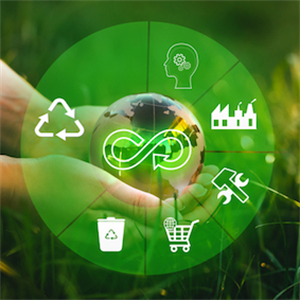
To open biodiversity, products and materials should be used repeatedly and again, without turning into the horse. New areas that will support the ability to put itself in nature. Circular economy is a system design where the waste is eliminated and the resources are used repeatedly. Defends the value of the material in each stage. Reuse, recycling, interposting, causing threat to live population and pollution. The need to remove new materials from nature again and again in the case it does not occur. This allows for the protection of the ecosystems necessary for the continuity of the living creatures and the recovery of corruptions. It is also a guide to cyclic economy, new technology and methods. Economic activity is reorganized to work harmoniously with nature; e.g. regenerative agriculture, agricultural forestry, agricultural ecology, controlled grass methods, new economic opportunities areas such as carbon capture. In summary, by eliminating circular economic resources, it provides efficient use of resources. In this way, it leads to new economic system designs that have positive converter effect instead of economic activity with negative impact on the environment.
Source: Sustainable Development