


How does microplastics weaken oceans?
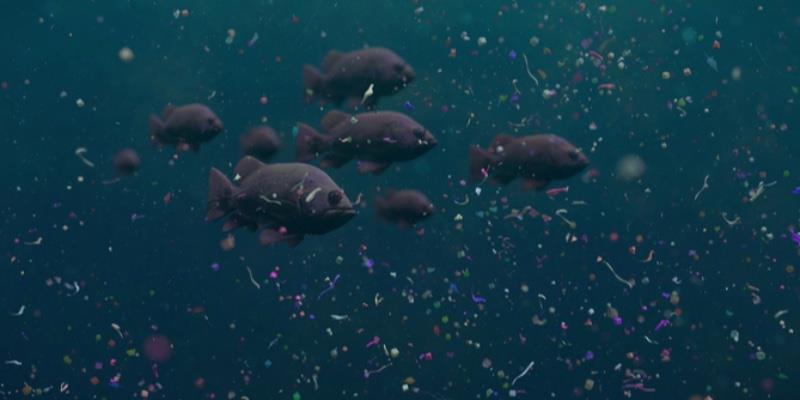
Microplastics weaken the capacity of absorption gases from the atmosphere of the ocean from the pill. Science is called ‘acil global action’. According to the United Nations, the oceans produce 50 percent of the oxygen we need, all carbon dioxide emissions are within 30 percent, and more than 90 percent of these emissions lead. This makes the planet’s largest carbon ingestion, which acts as a vital buffer against global warming. But Journal of Dangerous Materials: A new study published in plastic magazine has a warning that the relationship between microplastics and the role of the ocean in regulating the temperature of the world has been ignored for a long time.
How does microplastics affect the ocean?]
Researchers from Sharjah University in the United Arab Emirates examined a total of 89 studies in order to synthesize information on microplastics and ocean health. The research revealed that microplastics can disrupt sea life, shake greenhouse gases when they are shredded, and even weaken ‘biological carbon pump’. This term refers to a natural process that allows the carbon to be transported to deep layers of the ocean in the atmosphere. According to the study, microplastics interfere with decreasing the photosynthesis of phytoplanktones (using sunlight, water and carbon dioxide of minic marine organisms and oxygen release) and by disrupting the metabolism of zooplanktones. Zooplanktons also contain bacteria with algler, covering live creatures such as cril, and then larger zooplanktons, insects and fish. [
] is approached dangerously to 1.5°C limit][
Dr. Ihsanullah Obaidullah, who is responsible for the study, and in the field of integrated water treatment technologies, “Timely these changes can threaten the food safety and coastal communities across the world by means of warming oceans, acidization and biological diversity loss.” If the ocean loses the capacity of absorption carbon dioxide and excess heat, the emissions can begin to shake again into the atmosphere. So it can turn into a carbon seal and turn it into carbon source. This situation was experienced in all major rainforests in South America, Southeast Asia and Africa. These alerts come in a period of 2026 of scientists predict that temperatures are likely to be the fourth year in the pre-industrial levels. This level is dangerously approaching the 1st5°C limit specified in the Paris Agreement.
A 'integrated approach to end the microplastic pollution'][
According to a United Nations report dated 2025, the annual plastic production consists of 400 million tons of unfolded, and half of which is made of disposable products. It is noted that the annual plastic production can be tripled up to 2060. Although plastics are indispensable in some areas such as aircraft parts, electronic and consumer products, researchers emphasize that excessive consumption creates serious threats in terms of environmental sustainability and food safety. Therefore, the study is an integrated approach call by specifying that climate change cannot be addressed independently with microplastic pollution. In the study, “In this way, the appropriate steps to slow down the microplastic production can be reduced by taking the effects of climate change”. Home Obaidullah reveals the effect of the next step of the team on the climate of microplastics and adds to the words that it will develop ‘integrated solutions’.
Source: Environmental Protection