


Report
How is the heat accumulated by the oceans felt in the Mediterranean?
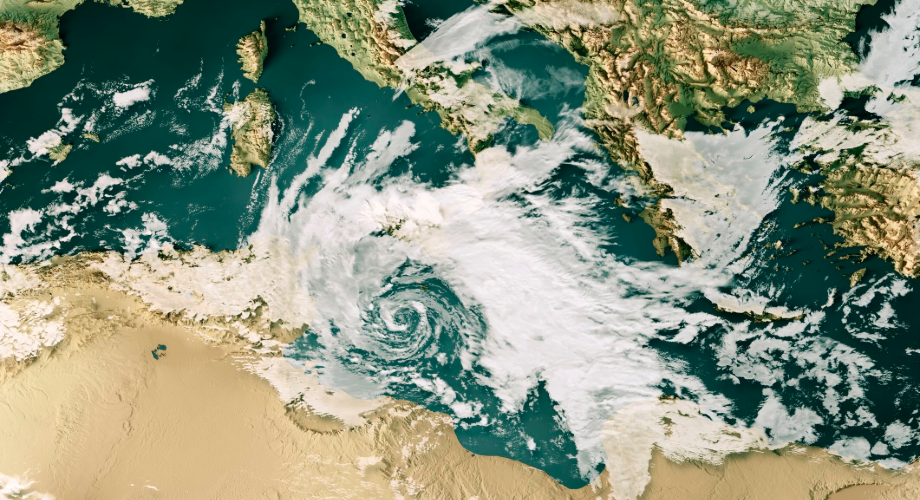
Oceans accumulate 40 times as much heat annually as the energy used by humanity. In 2025, that figure was 23 zettajoules, the ninth consecutive record year. But what does this figure mean to the fisherman living in the Mediterranean, the hotel operator planning the tourist season, and the business engaged in seafood farming?
It has a very concrete meaning. In 2024, the Mediterranean was the warmest year in measured history. This doesn't just mean the sea surface is a little warmer—it means longer and more severe sea temperature anomalies than have ever been seen in the last two decades.
214 days of heat wave in the Mediterranean
The definition of a heat wave varies depending on methodology. But all measurement methods give the same result for 2024: a record.
According to data from the Copernicus Marine Service, researchers using the fixed reference method found that the Mediterranean will spend 214 days in marine heat wave conditions in 2024. A year ago, in 2023, this number was 153 days. The difference is 61 days—almost two months.
The Eastern Mediterranean is in a worse situation. In the same period, the Eastern Mediterranean increased to 244 days. In some areas, heat wave conditions spanned 350 days of the year—almost continuously.
The Aegean, Ionian and Cretan seas also noted that 2024 was a record year. For Türkiye, these figures are critical both in terms of geographical proximity and economy.
Heat accumulation on the sea surface and in the depths are not the same thing
There is an important detail here. Global sea surface temperature declined slightly in 2024—making it only the third warmest year in measured history. But the upper 2,000 meters of the ocean reached a new record.
Why is this difference important? Because sea surface temperature is affected more quickly by short-term atmospheric fluctuations. The accumulation of heat in the depths indicates long-term, irreversible change. The oceans haven't stopped storing heat. On the contrary, it accelerated.
For the Mediterranean, this means marine heat waves becoming more frequent, longer and more severe. If the surface simply does not rest and the depths continue to warm, the system loses balance.
Sea creatures and fisheries: Migration without adaptation
Sea temperature anomalies have direct effects on fish and seafood. Warm water began to push tropical fish species north. While exotic species begin to increase in the Mediterranean, species with commercial value (anchovy, geranium, myrtle) migrate in search of cold waters.
Fish populations in the Mediterranean have decreased by an average of 40% in the last two decades. This isn't just a statistic—it means fishing vessels are catching less fish, fishing seasons are changing, the dock economy is tanking.
Aquaculture faces a similar problem. In farms, fish and mussels are subject to mass mortality due to hot water stress and lack of oxygen. Growers have limited options for adaptation—switch to a new variety, change location, or close down.
Mediterranean warming is not just a fishing problem
Seasonal quality in tourism changes. High sea temperatures attract tourists but also increase the risk of algal bloom. Cases of poisoning caused by seafood have increased.
Coastal erosion has also accelerated. Warm water is expanding—while thermal expansion raises sea level, the energy of the waves also increases. Coasts are eroding faster. Industrial centers such as Kütür and Kokaeli and tourism regions such as İzmir and Antalya are under physical threat.
Measurement technology: A little late, but it's there
Do we know about this change in the Mediterranean? Yes, because there is satellite technology, Argo buoys, and global monitoring networks like the Copernicus Marine Service. The data is clear, the scientific community is verifying, reports are published.
But zero connection between data and action. Fisheries policy does not adapt to warming. Coastal protection investment is not made against sea level rise. Tourism infrastructure is not prepared for alternative seasons.
Global heat, local decision making
The oceans accumulated 23 zettajoules of heat, which meant spending 214 days in heat wave conditions in the Mediterranean. This isn't just a number—it's a tangible threat to the regional economy, to food security, to coastal life.
But did this knowledge lead? Not yet. To go beyond data collection, local decisions need to be made—in fisheries management, tourism planning, coastal infrastructure. Science said: the system is changing. It's time for politics and economy to respond to change.
Source: https://sp.copernicus.org/articles/7-osr10/