


How to measure the environmental cost of a egg?
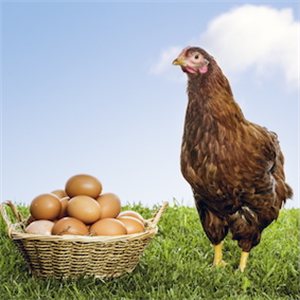
Organic egg is seen as a more ethical and healthier choice for many consumers. The production system, where chickens can access the open area, stands out with the approach to the animal welfare. However, a new research released in the UK reveals that this preference can give unexpected results in climate.
According to the research, the annual greenhouse gas emission reaches about 2 million 316 thousand tons of carbon dioxide equivalent, while all egg production in the UK passes through the organic system, this amount is 1 million 184 thousand tons in case of the production is done in the fully cage system.
What does this result mean that organic egg is worse for the environment?[[ T2]
[[T]]What does it say?
[ The basic bull of the work has higher carbon footprint of organic production. The main reason for this is the production efficiency.
Chickens in organic systems are grown in larger areas, moving more and needed more animals to produce the same amount of eggs. This means more feed production, more land usage and higher greenhouse gas emissions depending on it.
] This is the table that appears in terms of carbon account.
But sustainability is not only carbon
] In addition to the attention of the research, it only evaluates greenhouse gas emissions. Yet the environmental impact of a food product is discussed in a much wider frame.
The use of animal well-being, biodiversity, soil health, water supply and pesticide is also among the important components of sustainable production.
Organic production systems offer significant advantages in terms of limiting the use of synthetic pesticides, supporting natural habitats and living in more natural conditions of animals. Therefore it is not possible to decide which system is more sustainable looking at carbon emissions alone. [
The limits of the research
There are some important limitations of work.
Data used in research belongs to 2009-2010 period. New applications and technologies for increasing efficiency in organic production in recent years are not reflected in these calculations.
Besides this, work; carbon storage in the soil, differences in pesticide use, water quality or biodiversity. Therefore, the results are evaluated only in terms of greenhouse gas emissions.
]
The question is different
This research does not tell you that organic production should be abandoned. On the contrary, it shows that sustainable food systems cannot be judged with a single indicator.
It is not necessary to be the targets of the opponent to reduce the effect on climate with the protection of animal well-being. The main need is to improve production models, which can perform both purpose together.
With more efficient feed systems, good animal health practices, innovative production techniques and local production models, both carbon emissions can be reduced and production can be sustainable without compromising animal well-being.
Read More
The environmental cost of an egg is an incomplete assessment that only measure the carbon emission. We do not only offer a sustainable solution to focus on efficiency by ignoreing animal well-being in the same way.
The food system of the future; climate, animal well-being, natural resources and human health. Real sustainability is not to make a choice among these elements, but to develop solutions that can protect all at the same time.
According to the research, the annual greenhouse gas emission reaches about 2 million 316 thousand tons of carbon dioxide equivalent, while all egg production in the UK passes through the organic system, this amount is 1 million 184 thousand tons in case of the production is done in the fully cage system.
What does this result mean that organic egg is worse for the environment?[[ T2]
[[T]]What does it say?
[ The basic bull of the work has higher carbon footprint of organic production. The main reason for this is the production efficiency.
Chickens in organic systems are grown in larger areas, moving more and needed more animals to produce the same amount of eggs. This means more feed production, more land usage and higher greenhouse gas emissions depending on it.
] This is the table that appears in terms of carbon account.
But sustainability is not only carbon
] In addition to the attention of the research, it only evaluates greenhouse gas emissions. Yet the environmental impact of a food product is discussed in a much wider frame.
The use of animal well-being, biodiversity, soil health, water supply and pesticide is also among the important components of sustainable production.
Organic production systems offer significant advantages in terms of limiting the use of synthetic pesticides, supporting natural habitats and living in more natural conditions of animals. Therefore it is not possible to decide which system is more sustainable looking at carbon emissions alone. [
The limits of the research
There are some important limitations of work.
Data used in research belongs to 2009-2010 period. New applications and technologies for increasing efficiency in organic production in recent years are not reflected in these calculations.
Besides this, work; carbon storage in the soil, differences in pesticide use, water quality or biodiversity. Therefore, the results are evaluated only in terms of greenhouse gas emissions.
]
The question is different
This research does not tell you that organic production should be abandoned. On the contrary, it shows that sustainable food systems cannot be judged with a single indicator.
It is not necessary to be the targets of the opponent to reduce the effect on climate with the protection of animal well-being. The main need is to improve production models, which can perform both purpose together.
With more efficient feed systems, good animal health practices, innovative production techniques and local production models, both carbon emissions can be reduced and production can be sustainable without compromising animal well-being.
Read More
The environmental cost of an egg is an incomplete assessment that only measure the carbon emission. We do not only offer a sustainable solution to focus on efficiency by ignoreing animal well-being in the same way.
The food system of the future; climate, animal well-being, natural resources and human health. Real sustainability is not to make a choice among these elements, but to develop solutions that can protect all at the same time.
Source: Sustainable Living