


Is Coral reefs at a irreversible point?
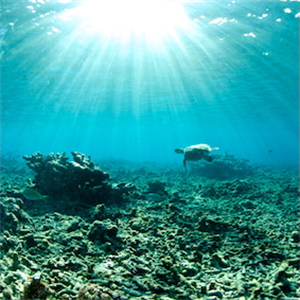
The Great Set Resifi in. (Great Barrier Reef), was staged in one of the biggest and most destructive coral whitening events ever recorded in 2024. According to the research conducted by University of Sydney, more than 40 percent of the coral columns in the southern part of the reef was completely destroyed in the last year. This event states that global warming-source ocean temperature rises are sprinkled once again on coral reefs, science people can approach a irreversible point where the process is speeded and irreversible.
2024 coral whitening event: A big ecosystem collapse
A group of scientists from University of Sydney examined 462 coral columns in One Tree Island, located in the southern part of the Great Set Resifi between February-July 2024. The results of the study are quite striking:[
Home Resifin died 44 percent completely.
]
Home The mortality rate in some coral species is up to 95 percent.
]
Home The number of corals that are not affected by whitening was limited only by 92 columns.
This incident was recorded as a fifth-large coral whitening crisis since 2016. According to experts, there was no whitening and mass on this scale. Maria Byrne, one of the authors of the research, defines the loss of experienced as ‘real-destructive’, “We have been warned for years in terms of change of hope, but still did not take effective measures”. The other author Ana Vila Concejo said that this study should be a call for ‘politic constructors and economists’ and stressed that the resistance of coral reefs is not as much as ever.
What is mercan whitening and why?]
Coral whitening occurs in losing algae (zooxanthellae) that corals live as symbiotic as a result of increasing ocean temperatures. Algler provides nutrients and color to corals, so the loss of algae leads to whiteening of corals and die over time. Although coral whitening does not mean death alone, it becomes more often and more severe together with increased temperatures, slowing down the process of recovery of corals and making it more vulnerable to diseases. According to the study of University of Sydney, some types of corals like Acropora have died at 95 percent after whitening. This situation shows that corals lose old endurance and a large imbalance occurred in the ecosystem.
Coral reefs are considered one of the basic stones of the ocean ecosystem. It is located in more than 100 countries in the global diameter and supports 25 percent of sea life. However, this sensitive ecosystem quickly disappears.
]
Home Around 50 percent of the coral cover of the Great Set Resifi since 1995.
Home According to NOAA and ICRI, the world now lives the largest global coral whitening event that is registered. [
• 14 percent of corals worldwide since 2009.
If the global warming continues, it can become inevitable that the Big Set Resifi will experience whitening on the annual basis. 2024 year, while saved globally as the hottest year, this kind of temperature rises accelerate the process of no coral reefs.
Do I have a solution?]
Science emphasizes that people should take quick and comprehensive measures to save Big Set Resifi and other coral reefs. The most effective solutions include:
Home Reducing global carbon emissions: It is necessary to reduce fossil fuel consumption and accelerate the transition to renewable energy sources.
Home Increased protection zones: More sea protection area should be created for the protection of reefs from fishing and other threats. [email protected]
Home Growing heat resistant coral types: Science people are trying to relive reefs by developing coral types that are resistant to higher temperatures.
[
However, if researchers are not struggling with climate change, the Large Set Resifi emphasizes that it may be completely destroyed in the next generations. [
Ekosystem is seen how vulnerable]
The Great Set Resifi lives one of the biggest influential crises in history due to human-source climate change. The coral whitening in 2024 shows how vulnerable the ecosystem. If you do not take quick and effective measures, it seems inevitable that the unique natural heritage is completely lost.
Source: ]Earth.org
Source: Ecosystems