
Sustainable Development Goals: Clean Water and Sanitary Conditions
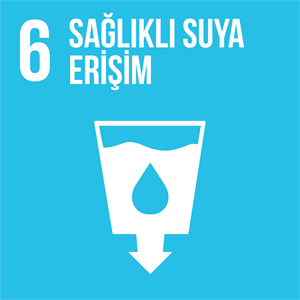
Although 2,1 billion people have been provided to access better water and sanitary conditions since 1990, it is a major problem that affects all continents. Therefore, to ensure that everyone has a safe and accessible drinking water up to 2030, investing in infrastructure, building sanitary facilities and promoting hygiene at every level is a goal that today takes place among the priorities of all world countries.
[[T]]]
[Reals:[
- Water scarcity affects more than 40% of people worldwide.
- Due to global warming as a result of climate change, this rate, which is already an alarming level, is estimated to rise even more.
]
- Due to global warming as a result of climate change, this rate, which is already an alarming level, is estimated to rise even more.
- In 2011, 41 countries experienced water shortage. In 10 of these, renewable clean water resources have to be exhausted and now use alternative resources.
- Due to increased drought and deserting, these trends are worse.
- Until 2050, at least one of the four people is estimated to be affected by frequent water shortage. [
- Due to increased drought and deserting, these trends are worse.
- Until 2050, at least one of the four people is estimated to be affected by frequent water shortage. [
Hedefler:
]
The information on this page is ]]The Unified Nations Development Program (UNDP Turkey)] and [T.C. Sustainable Development Goals of the Ministry of Development are compiled on the website.
[
[- obtaining access to drinking water universally and fair for everyone up to 2030. [
- Providing access to sanitary conditions with sufficient and fair sewage services for anyone up to 2030.
- up to 2030, by reducing pollution, blocking garbage casting, minimizing the mixture of harmful chemicals and substances into water, reducing untreated waste water rate, recycling and safe reuse greatly increasing the water quality.
- greatly increasing water usage efficiency in all sectors up to 2030, providing sustainable fresh water supply to solve the problem of water scarcity and significantly reduce the number of victims from water scarcity.
- implementation of integrated water resources management at all levels, including cross-border collaboration if it is convenient to 2030.
- Protecting ecosystems related to water, including mountains, forests, wetlands, rivers, fuels and lakes until 2020.
- Expansion of international cooperation and capacity enhancing support for actions and programs related to water and waste water in developing countries, water collection, desalination, water efficiency, wastewater treatment, recycling and abandoning usage technologies. [
- Supporting and strengthening local engagement to improve water and waste water management.
The information on this page is ]]The Unified Nations Development Program (UNDP Turkey)] and [T.C. Sustainable Development Goals of the Ministry of Development are compiled on the website.
Source: Sustainable Development