


The world’s first carbon tomb was launched
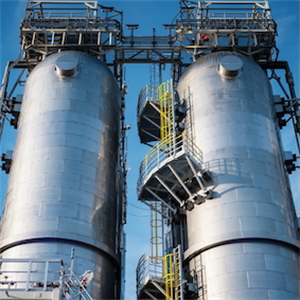
The Northern Lights project, developed with the aim of reducing global carbon emissions, has been operating in Norwegian open. This facility in the partnership of Equinor, Shell and TotalEnergies is injecting the industrial-source carbon dioxide (CO2) gas from factories in Europe to the north sea base in a depth of 2600 meters. Thus, Northern Lights has won the title of the first commercial carbon transportation and storage facility in the world. This development shows that carbon capture and storage (CCS) technology can be a scalable climate solution.
A new term started[
In the Northern Lights plant located in the Øygarden area of Norway, the first time, the liquefied carbon release successfully injected into the sea base. CO2, captured in the cement factory of Heidelberg Materials, was sent to the Aurora reservoir under 2600 meters of the North Sea with a 100-kilometer pipeline. This development is seen as a historical step towards permanent elimination of industrial-borne emissions. [
[
]1.5 million ton carbon storage capacity
The Northern Lights project allows the grains in the carbon dense sectors such as cement to be captured directly in the source and permanently buried. The system with a capacity of 1.5 million tons of carbon storage per year in the first stage offers a concrete solution to reduce industry-source emissions in Europe. With the second phase of the project, this capacity is 5 million tons.
The real solution is never released into the atmosphere]
]Northern Lights reminds that carbon capture and storage technologies are only a start. This method of science people evaluates time-saving ‘transition solution’ in the energy conversion process. However, the real solution lies in the atmosphere, not embedding carbon. Nevertheless, this new carbon cemetery was history as one of the most concrete steps thrown away from fossil fuels.
A new term started[
In the Northern Lights plant located in the Øygarden area of Norway, the first time, the liquefied carbon release successfully injected into the sea base. CO2, captured in the cement factory of Heidelberg Materials, was sent to the Aurora reservoir under 2600 meters of the North Sea with a 100-kilometer pipeline. This development is seen as a historical step towards permanent elimination of industrial-borne emissions. [
[
]1.5 million ton carbon storage capacity
The Northern Lights project allows the grains in the carbon dense sectors such as cement to be captured directly in the source and permanently buried. The system with a capacity of 1.5 million tons of carbon storage per year in the first stage offers a concrete solution to reduce industry-source emissions in Europe. With the second phase of the project, this capacity is 5 million tons.
The real solution is never released into the atmosphere]
]Northern Lights reminds that carbon capture and storage technologies are only a start. This method of science people evaluates time-saving ‘transition solution’ in the energy conversion process. However, the real solution lies in the atmosphere, not embedding carbon. Nevertheless, this new carbon cemetery was history as one of the most concrete steps thrown away from fossil fuels.
Source: News