



Blog
What Happened in the First Three Days of COP31?
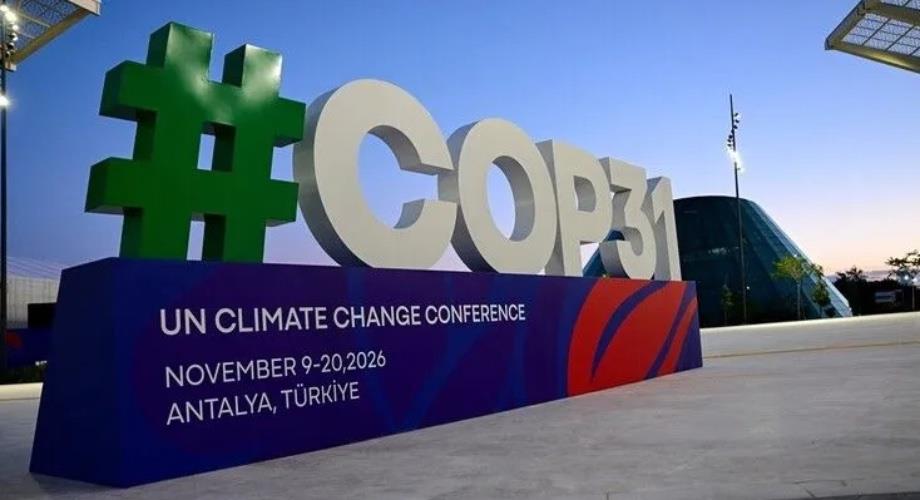
In the first three days of COP31 held in Antalya, new data on global emissions, energy conversion, climate finance and the effects of climate change on human health came to the fore. The leaders' summit, which started on the third day of the conference, emphasized the responsibility of countries to turn their climate goals into concrete policies.brought it to the agenda again.
The United Nations Climate Change Conference COP31, hosted by Türkiye, will be held in Antalya between 9-20 November 2026. Australia takes part in the conduct of negotiations at the summit, where Türkiye assumes the chairmanship of the conference.
The developments of the first three days show that the climate struggle is not limited to announcing new targets. Reducing global emissions, transformation of energy systems, adaptation to climate risks and access to finance for developing countries are among the main topics of the negotiations.
Expectation of a limited decrease in global emissions
The Global Carbon Budget 2026 report, published by the Global Carbon Project on November 10, led researchers to expect carbon dioxide emissions from fossil fuels and cement production to decrease by 0.4 percent to 38.2 billion tons in 2026. While the growth in solar and wind energy is among the important factors limiting the increase in emissions,The effects of conflict on energy supply and prices lead to short-term changes in fossil fuel consumption.
However, the research reveals an important distinction. Taking into account emissions from deforestation and other land use changes, total global carbon dioxide emissions are expected to reach approximately 43.3 billion tonnes in 2026; This amount is above the 42.8 billion tons calculated for 2025. Therefore, the limited decrease in fossil fuel-based emissions means that total emissions also decrease.It does not mean. Researchers emphasize that despite progress in clean energy technologies, the transformation needs to accelerate to achieve a permanent reduction in emissions.
Climate finance: New tools, ongoing disputes
In the early days of COP31, climate finance became one of the most important negotiation topics between countries. Countries have reached an agreement that the two-year Climate Finance Work Program created at COP30 held in Brazil will be considered as an independent agenda item at COP31. This decision is based on the financing of developed countries within the scope of the Paris Agreement.It shows that the implementation of the obligations will be evaluated under a separate heading.
For developing countries, accessibility, predictability and the conditions under which financing is provided are as critical as the amount of financing. While the European Union objected to the new agenda regulation, arguing that the scope of the work program was determined in advance, India and other developing countries determined that the financing obligations were determined under a separate heading.supported its evaluation under .
There were sharper disagreements regarding adaptation financing. African countries have proposed tripling funding for climate change adaptation. Developing countries requested agreement to treat this proposal as an independent agenda item; However, as a result of negotiations, there was no consensus among the countries on this issue.could not be provided. Although adaptation finance negotiations continued in other negotiation processes, a new and binding climate finance agreement could not be created at the end of the first three days.
The size of the funding gap shows why these discussions are so important. According to the evaluations of the United Nations Environment Program, while the annual financing need of developing countries for adaptation to climate change reaches hundreds of billions of dollars, the financing provided from international public resources is well below these needs.remains. The main problem is the uncertainty about how the existing financing commitments will be implemented, the degree of binding and the conditions under which the needed resources will be delivered to the countries.
Electrification debate: Why is the source of electricity important?
In the first days of COP31, energy transformation discussions focused around the electrification target that Türkiye put on the agenda. The proposal aims to increase the share of electricity in global final energy consumption to 35 percent by 2035. Electrification is the use of electricity instead of the direct use of fossil fuels in areas such as transportation, heating and industry.While it refers to the widespread use of technologies, electric vehicles and heat pumps are among the examples of this transformation.
However, increasing electricity use alone does not guarantee that emissions will decrease; The sources from which electricity is produced are decisive. While some countries advocate a clear association of the electrification target with clean energy sources, the predominance of coal and natural gas in electricity generation limits the emission reduction that this transformation can provide.Therefore, in addition to the widespread use of solar and wind energy, increasing energy efficiency, developing storage technologies and strengthening electricity networks are also important. The debate at COP31 raises a fundamental question for energy policies: How can we reduce emissions from electricity production while increasing electricity use?
Health and climate: Antalya Health Resilience Initiative started
The World Health Organization (WHO) announced the launch of the Antalya Health Resilience Initiative (AIR) as part of COP31's Health Day on 9 November. The initiative, developed by the COP31 Presidency with the support of WHO, aims to strengthen countries' preparations against the effects of climate change on health.
Extreme heat, floods, drought and air pollution affect people's daily lives and access to healthcare; It is important that hospitals continue to provide service, especially during extreme weather events, that access to safe water is maintained and that early warning systems work effectively. The Antalya initiative aims to combine scientific data and countries' experiences into concrete health systems.While aiming to transform health policies into policies, increasing the resilience of health systems against climate risks is also among the priorities of the initiative.
According to the data shared by WHO within the scope of COP31, approximately 3.5 billion people around the world live in conditions that are highly vulnerable to climate change. This data shows that adaptation efforts to climate change cannot be limited to environmental policies alone; investments in health infrastructure, early warning systems and preparations for climate risks,It is becoming increasingly important for the protection of human health.
WMO: Last 12 years are the warmest on record
The World Meteorological Organization (WMO) drew attention to the global temperature increase with the State of the Climate Update 2026 report published at the opening of COP31. According to the report, while the 2015-2026 period constitutes the 12 hottest years since the measurements began, WMO expects 2026 to be one of the four hottest years on record. In the period January to SeptemberThe global average temperature was approximately 1.47 degrees above pre-industrial levels.
The organization also stated that the heat accumulated in the oceans continues to increase and global sea level has reached a record level, while WMO Secretary General Celeste Saulo pointed out in her statement on November 9 that El Niño conditions may affect global temperatures in 2027. Events such as extreme temperatures, heavy rains and droughts are important factors in adaptation efforts to climate change.increases its importance.
According to another data shared by WMO, progress is being made in early warning systems. The number of countries reporting that they have early warning systems covering multiple hazards increased from 56 in 2015 to 136 in 2025; This development shows that the preparedness capacity against climate risks can be increased, but the effectiveness of the systems depends on the observation infrastructure and the provision of the necessary financing.remains connected.
Overshoot and adaptation: Why is the 1.5 degree target being debated?
COP31 is being held at a time when discussions on the goal of limiting the global temperature increase to 1.5 degrees are intensifying. The Paris Agreement aims to keep the increase in global average temperature to well below 2 degrees Celsius relative to pre-industrial levels and to strive to limit the increase to 1.5 degrees; However, the high recorded in recent yearstemperatures show that it is becoming increasingly difficult to achieve this goal.
The concept of overshoot, used in climate science, refers to the global temperature increase temporarily exceeding a certain limit and then decreasing below this limit again. Although the average temperature of a single year exceeding 1.5 degrees does not necessarily mean that the long-term temperature target of the Paris Agreement has been exceeded, the extent to which and for how long the temperature increase exceeds the limit is determined by climate change.is important in terms of the effects of change. As the magnitude and duration of the exceedance increases, the risk of some environmental damage becoming permanent increases, and therefore emission reduction and climate change adaptation efforts must proceed together.
Early warning systems, water management, agricultural resilience and infrastructure investments suitable for climate risks are among the main examples of adaptation efforts. How to finance the losses and damages caused by climate change also forms an important part of these discussions.
Exiting fossil fuels: Brazil's road map
Policy proposals to move away from fossil fuels were brought to the agenda at COP31. Brazil has proposed a road map that aims to support countries' transition to renewable energy by reducing their use of coal, oil and natural gas. While limiting new fossil fuel infrastructure and reducing fossil fuel subsidies are among the policy tools discussed.Brazil advocates addressing the issues of preventing deforestation and providing climate finance to developing countries in international cooperation.
However, these recommendations are not yet binding decisions agreed upon by the countries participating in COP31. While Brazil's approach contributes to discussions on what policy tools can be used to accelerate the energy transition, the impact of the proposals depends on the extent to which countries translate them into concrete policies.
Third day: World leaders met in Antalya
The World Leaders Climate Action Summit started on November 11, the third day of COP31. The summit, held on November 11-12, allows heads of state and government to share their national priorities and calls for international cooperation regarding the fight against climate change.
In his opening speech, United Nations Secretary-General António Guterres emphasized the need to accelerate the fight against climate change, and moving away from fossil fuels and developing countries' access to climate finance were among the prominent topics in his speech. Brazilian President Luiz Inácio Lula da Silva believes that wars and trade disputes are affecting climate change internationally.While noting that the issue was pushed to the background on the agenda, Turkish President Recep Tayyip Erdoğan emphasized the importance of international solidarity in the fight against climate change.
A common theme came to the fore in the leaders' statements: Stronger cooperation is required for countries to translate their climate goals into practice. However, political statements at the leaders' summit do not have the same meaning as new and binding decisions adopted in the negotiations; The talks to be held on the second day of the summit and the progress of COP31sessions will show what concrete steps these calls will turn into.
Economic benefits are also on the agenda in climate action
The economic effects of climate policies were also discussed at the leaders' summit on November 11. According to the news published by Reuters on the same day, some leaders argued that clean energy investments should be evaluated not only in terms of emission reduction, but also in terms of economic resilience and energy costs. Fluctuations in energy prices and tensions in international tradeWhile it causes more emphasis on energy security, renewable energy investments, energy efficiency and electrification policies are addressed together with reducing dependence on fossil fuels.
However, the economic and environmental benefits of this transformation depend on the countries' energy infrastructure, access to finance and the policies they will implement.
Zero waste: the thematic agenda of November 11
On the third day of COP31, the issue of zero waste was on the thematic agenda of the conference. Türkiye's COP31 action agenda aims to reduce the increase in waste generation by 50 percent by 2035. Reducing waste, using resources more efficiently and disseminating circular economy practices are among the basic elements of this approach.
However, this target does not represent an actual reduction or a binding decision accepted by all countries; While the zero waste agenda shows that climate policies are not limited to energy production alone, reducing resource use in production and consumption processes is also among the areas that can contribute to limiting greenhouse gas emissions.is taking.
Basic question after the first three days
The first three days of COP31 brought the relationship between climate risks revealed by scientific data and countries' policy preferences back to the agenda. While Global Carbon Project's emission estimates and WMO's temperature data show that global warming continues, electrification discussions reveal the importance of clean electricity sources in energy transformation.and the Antalya Health Resilience Initiative draws attention to the value of adaptation to climate change for human health.
While the adoption of a two-year work program in climate finance as a separate agenda item is an important step for the progress of negotiations, the failure to reach agreement on a separate agenda item for tripling adaptation finance shows that differences of opinion between countries continue. ThirdThe leaders' summit, which started today, brought the implementation of climate policies, financing and international cooperation to the center of the political agenda again.
What will be decisive in the coming days of COP31 will be the extent to which these discussions will turn into concrete commitments and joint decisions. After the first three days, the key question is: Will countries be able to agree on the financing and policy tools needed to implement climate goals?
Image Source: Anadolu Agency
Resources
Global Carbon Project, Global Carbon Budget 2026, 10 November 2026.
World Meteorological Organization (WMO), State of the Climate Update 2026, 9 November 2026.
World Health Organization (WHO), COP31 Health Day statements, 6 and 9 November 2026.
UN Climate Change Secretariat (UNFCCC), COP31 official program and updates 11 November, 2026.
Carbon Brief, COP31 agenda and negotiation evaluations, 9-11 November 2026.
Down To Earth, COP31 climate finance work program and adaptation finance negotiations, 10 November 2026.
Reuters, COP31 leaders' summit and energy transition news, 11 November 2026.
Geneva Environment Network, COP31 action agenda and thematic days, 9 November 2026.
Source: https://cop31.tr