


Report
Are Climate Commitments Sufficient? 2.6 Degree Warning From UN For 2100
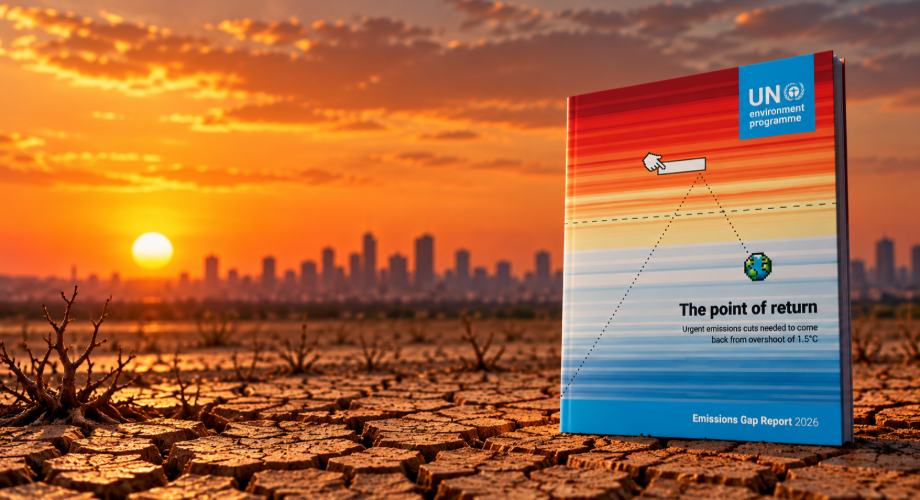
The climate commitments announced by countries may be insufficient. According to the United Nations Environment Program (UNEP) 2026 Emission Gap Report, even if all current targets are met, the world may warm by approximately 2.6 degrees in 2100 compared to the pre-industrial period. If current policies continue, this figure increases to 2.8 degrees.
The Paris Climate Agreement aims to limit it to 1.5 degrees. But it turns out that the world does not comply with these goals.
Not enough: 2.6 degrees or 2.8 degrees?
UNEP puts forward two scenarios. First: if countries fully fulfill their current commitments, the temperature increase could be limited to 2.6 degrees. Second: if today's policies do not change, 2.8 degrees of warming is inevitable.
The 0.2 degree difference between them is significant. This shows the distance between implementing and not implementing goals. However, both scenarios remain far from the 1.5 degree target.
Why have the forecasts gotten worse?
The 2026 report is more pessimistic than last year. The US withdrawal from the Paris Climate Agreement is one factor. According to the report's lead author, Anne Olhoff, this step could add 0.1 degrees to the temperature increase by the end of the century.
Additionally, historical emissions estimates have been updated. US greenhouse gas emissions in 2025 increased by 133 million tons of carbon dioxide equivalent. The rise in electricity demand and the increase in coal use were effective in this.
The total additional emissions of 124 countries that increased their emissions was 189 million tons. The USA alone accounted for 70 of this. (Note: This rate only includes countries that increase emissions. The 63 countries that reduce emissions are not included.)
What does moving away from the 1.5 degree target mean?
Each additional degree increases the risk. High temperatures exacerbate heat waves, drought, excessive rainfall and water scarcity.
These impacts cross ecosystems. Agricultural production, food security, human health and infrastructure are threatened. Rising temperatures in regions with limited water resources increase the need for agricultural irrigation. Increased extreme weather events disrupt supply chains and increase costs.
The difference between 1.5 degrees and 2.6 degrees is not only a numerical risk but also a social risk.
Why are commitments alone not enough?
Stating a goal is different from implementation. Reducing fossil fuels, renewable energy investments, energy efficiency and industrial transformation are critical areas. But long-term goals are not enough—short- and medium-term policies must also be compatible.
To keep global temperature rise lower, countries need to strengthen their targets and accelerate emissions reductions. Current commitments are minimum step. More is mandatory.
Why is 2030 critical?
The year 2030 is the turning point. Emission reductions achieved to date will directly determine the level of warming for the rest of the century.
Three areas come to the fore: Closing the gap between declared targets and implemented policies, accelerating low-carbon transformation in energy systems, and regular monitoring of emission data.
Implementing climate targets is necessary but not sufficient. Measurable and implementable policies that go beyond current commitments are needed. What will be decisive will be today's actions, not future goals.
Source: UNEP Emissions Gap Report 2026
Source: https://www.unep.org/en/publications/report/emissions-gap-report-2026