


Report
The Hidden World of Salty Lakes: Habitat of 200 Species
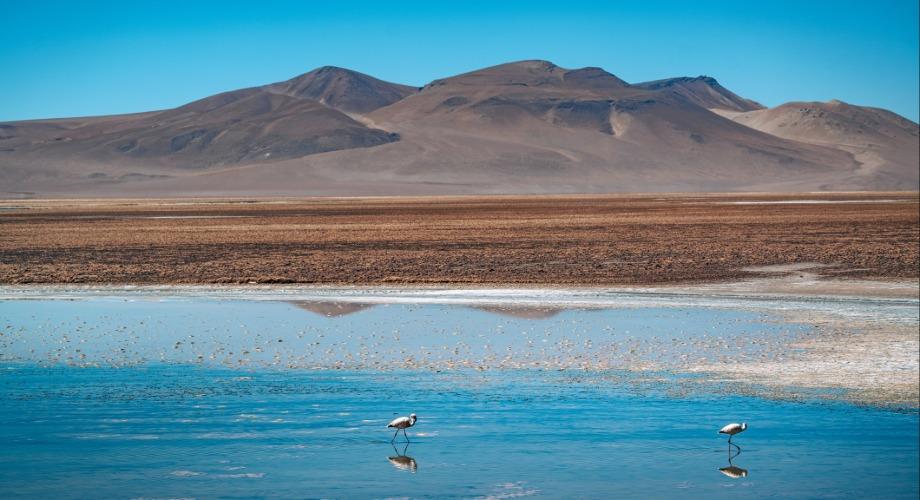
Saline lakes are the world's least known but ecologically important aquatic ecosystems. They provide habitat for millions of creatures adapted to different salinity levels. They are valuable in many fields, from scientific research to tourism. However, climate change and increased water use threaten the future of these sensitive systems.
The international study, published in September 2026 in the journal Nature Communications, examined the biodiversity and ecosystem services of 85 saline lakes. The research team brought together 26 scientists. The team included Prof. Dr. Nurgül Balcı, a faculty member at Istanbul Technical University, and highlighted the global importance of protecting saline lakes.
A significant portion of the water in the world's lakes is salty.
The findings of the study are striking from the beginning. Saline lakes contain more than 45% of the world's lake water volume. They make up approximately 23% of the total lake surface area.
Scientists evaluated lakes containing more than one gram of dissolved salt per liter. The 85 lakes studied were diverse: 27 soda lakes, 40 inland sulfate and chloride lakes, 18 coastal seawater lakes. The salinity values of the lakes ranged from 1 gram per liter to 375 grams.
This wide range carries an important message. Saline lakes are not uniform ecosystems. The chemical structure, living communities and environmental conditions of each lake have different characteristics.
Salty lakes provide habitat for 200 species
The most striking finding of the research is related to biodiversity. The study’s most striking finding relates to biodiversity. The 85 lakes examined support 200 species classified as threatened or near threatened on the International Union for Conservation of Nature (IUCN) Red List. 53% of these species are bird species. Fish, mammals, reptiles, amphibians and invertebrates are also included in this list.
Researchers also detected nearly 500 species of plankton in the lakes. None of these species are classified as threatened. However, this may also mean that sufficient evaluation has not been made. Lack of information on under-researched living groups such as plankton can make conservation efforts difficult.
Salinity level is one of the main factors affecting the diversity of life in lakes. Some lakes with high salinity host species that can only survive in certain conditions. Therefore, measuring the ecological value of a lake only by the number of species is insufficient.
What benefits do salty lakes provide to humans?
Salty lakes are not just natural habitats. They are ecosystems that support scientific research, tourism and various economic activities.
Researchers evaluated 11 different ecosystem services provided by lakes. Each lake provided an average of five different services. Contribution to scientific research was prominent in 88.4% of the lakes. Tourism and recreation activities were seen in 83.7%.
Economic activities such as fishing, biomass harvesting and salt production were also carried out in some lakes. However, the existence of these activities does not always lead to positive ecosystem results. The effects of water use and resource extraction on the natural balance of lakes are significant.
Climate change and excessive water use threats
A significant portion of saline lakes are located in closed basins. In these lakes, the outflow of water is limited. The water level depends on the balance between water reaching the basin and evaporation.
When precipitation decreases and temperatures rise, evaporation increases. Lake levels drop. Intensive water use for agricultural irrigation, industry and residential areas also reduces the water reaching the lakes.
When water levels drop, salinity levels change. This affects the food web, from plankton to birds. Exposing the lake bottom may create new environmental problems due to salty dust carried by the wind.
Therefore, when evaluating the future of saline lakes, it is necessary to consider climate change and human-induced water use together.
Conservation requires planning at the basin scale
Protection of saline lakes is not possible by protecting only the lake surface. The streams that feed the lake, groundwater and surrounding land use are also part of the ecosystem.
Intensive irrigation activities taking place far from the lake may reduce the amount of water reaching the lake over time. Excessive withdrawal of groundwater or alteration of stream flows affects lake level and salinity balance.
The findings of the study show that the unique conditions of each lake must be taken into account. Long-term monitoring of water level, salinity and biodiversity enables early detection of environmental changes.
Participation of local people, scientists, public institutions and water users in decision-making processes is also an important part of basin management. Thus, ecological needs are evaluated together with the social and economic conditions of the region.
What does the research mean for Türkiye?
Türkiye has an important place in this research field with its salty and alkaline lakes with different characteristics. The future of these ecosystems depends on water management at the basin scale, not just on lake environmental measures.
The main conclusion of the international study is clear: saline lakes are not interchangeable bodies of water. Each hosts different living communities, chemical conditions and ecosystem services.
To preserve this diversity, it is necessary to monitor the water budget of the lakes. It is necessary to determine environmental pressures. Conservation decisions must be supported by scientific data. The protection of saline lakes contributes to the sustainable management of water resources as well as biodiversity.
Source: https://www.nature.com/articles/s41467-026-76684-0